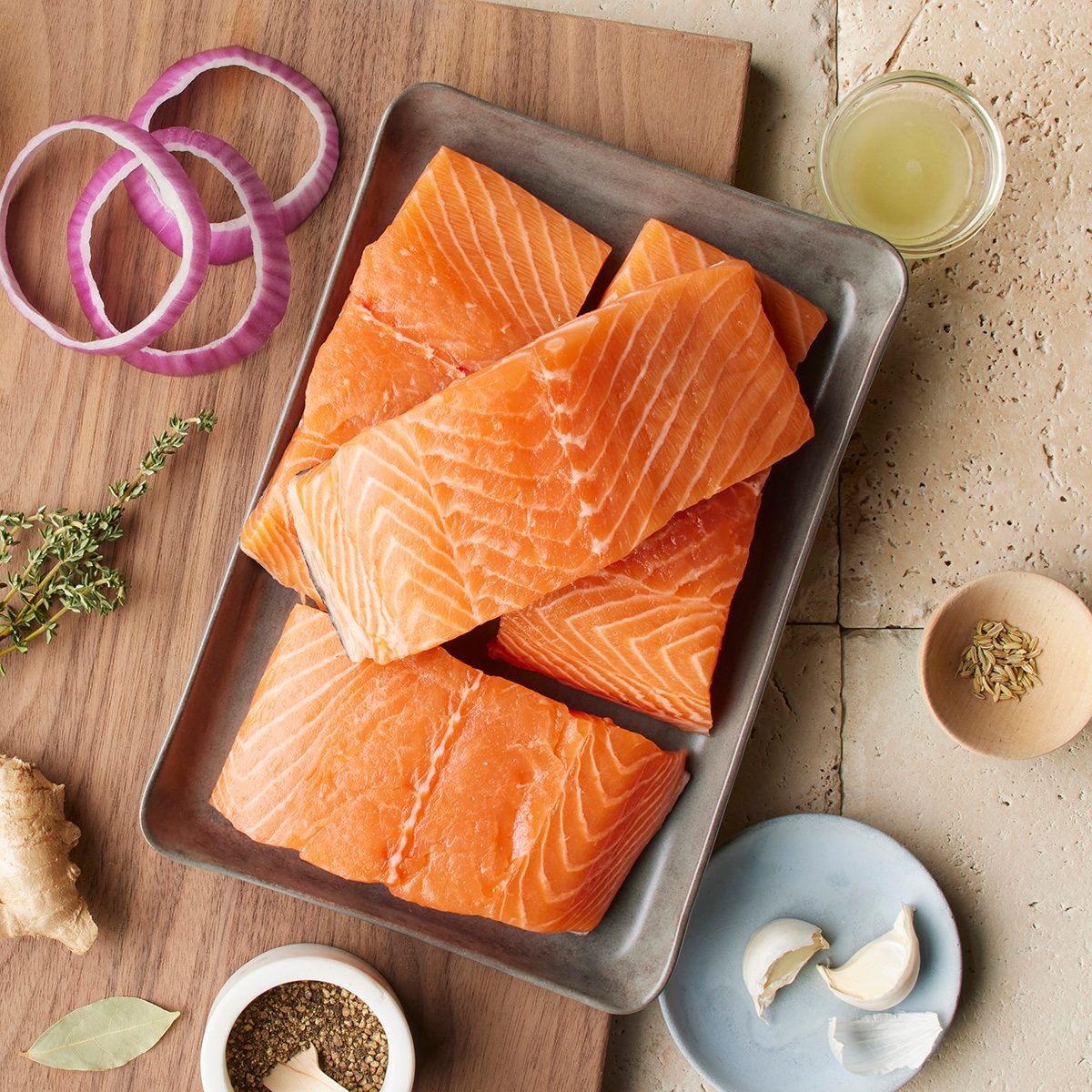
What's the difference between wild and farmed, coho and king, or Pacific and Atlantic salmon? This helpful guide to the most common types of salmon you find at the store will help you buy with confidence.
It’s no secret that salmon is good for you. There’s a ton of protein in salmon, and it’s loaded with nutrients and other health benefits, including calcium, zinc and omega-3 fatty acids. It’s also super delicious grilled, broiled, baked, pan-fried, seared or even raw.
Salmon has a lot more to it than meets the fish eye, though. One year I was gifted vacuum-sealed wild salmon fillets for Christmas. I was familiar with some of the types of salmon in the box, but others were new to me. As I cooked through them, I discovered that the differences went deeper than the names. Each species has its own flavor and texture, and the best ways to cook it can vary.
Wild-Caught vs. Farm-Raised Salmon

Wild-caught and farm-raised salmon differ in taste, texture and slightly in nutritional value. All salmon is a good source of omega-3 fatty acids, but farmed salmon has higher fat content, while wild salmon has more calcium, iron, potassium and zinc. Farmed salmon has a mild, buttery taste that appeals to those who generally find fish too strong-tasting. Wild salmon’s taste and texture vary between species because what they eat and where they roam isn’t controlled as with farmed salmon.
Both wild-caught and farm-raised salmon are subject to strict guidelines to protect fish populations and the environment. If sustainability is important to you, the Monterey Bay Aquarium Seafood Watch is an excellent, frequently updated resource for all types of fish, including salmon. It gives best, certified, good and avoid ratings to help consumers make sustainable choices.
Pacific vs. Atlantic Salmon
Wild-caught salmon will always come from the Pacific, and there are five types that are fished commercially: king, sockeye, coho, keta and pink salmon. Due to fishing restrictions in the Atlantic Ocean, the Atlantic salmon you buy will always be farm-raised. Salmo salar is the only type of salmon native to the Atlantic, though you may see it labeled by the area where it was raised.

Atlantic Salmon (Salmo Salar)
Also known as sea run salmon, kelts or black salmon, this is the only native Atlantic salmon species. It may be labeled as North American, European or Baltic, indicating where it was raised. Wild Atlantic salmon aren’t commercially fished because of their endangered status. If you’re buying Atlantic salmon in the United States, expect it to be farmed. These fish are medium-sized, with a rounded middle and tapered tail and head.
Atlantic salmon has a mild, buttery flavor and color ranging from light pink to pale orange, depending on what it was fed. It’s incredibly versatile in easy salmon recipes because its high fat content prevents it from drying out quickly, even if it’s slightly or accidentally overcooked.

King Salmon (Chinook Salmon)
Also called Chinook salmon, king salmon is the largest of the Pacific salmon. It’s prized by chefs and home cooks everywhere for its high fat content and silky texture. Because fillets or steaks are generally thicker and can withstand longer cook times, they’re a good choice for baked salmon recipes, air-fryer salmon, or cooking in a hot cast-iron pan until the skin is crisp and crackling. It also tastes fantastic grilled, as in this grilled salmon with lemon recipe.

Sockeye Salmon (Red Salmon)
Also called red salmon, due to the vibrant color of the meat, sockeye salmon has a stronger flavor and is lower in fat than other varieties. You can serve it raw (though it may be best to review information about eating raw salmon first) or cooked simply and quickly, as with this pan-seared salmon recipe. Because sockeye salmon is leaner than other types of salmon, you need to be careful not to overcook it and make it tough.
This variety is great for salmon en papillote (baked in paper) or cedar plank salmon because the barrier provided by the paper or cedar prevents it from drying out. Similarly, chopped or ground sockeye salmon makes a tasty salmon burger, as the other ingredients keep the fish moist.

Coho Salmon (Silver Salmon)
Wild coho salmon looks the most similar to Atlantic salmon, between the size, shape and silver color of its skin. Some Northwestern coho salmon populations along the central California coast are listed under the Endangered Species Act due to commercial overfishing and habitat loss. However, several types of wild-caught coho, especially in more northern waters like Alaska, are thriving and a sustainable option. Coho salmon has a mild taste and a firm texture.
Some consider this a good fish for salmon newbies! Coho salmon is smaller than king salmon and another great option for cedar plank grilling. But it is equally good for poaching or roasting whole. Because the meat is dense and firm, this is one of the most popular salmon varieties for smoking.

Pink Salmon (Humpback Salmon)
Pink salmon is a Pacific species usually used in canned salmon. The wild-caught fish weighs less than 6 pounds, and the flesh is lean and light colored with a mild taste. Canned pink salmon is just as nutritious as fresh, with lots of protein, omega-3 fatty acids and calcium if you eat the bones. Canning softens the bones, making them safe to eat. Just mix them into the salmon, as my mom did, and you won’t even notice them. Canned salmon is also more affordable than fresh, and you can stock it in your pantry.
Try pink salmon in any recipe where you might initially reach for tuna or in one of these easy canned salmon recipes to showcase its versatility, flavor and texture. Our air-fryer salmon patties are crispy, perfectly seasoned and can be on the table in under 30 minutes.

Chum Salmon (Keta or Dog Salmon)
Chum salmon is a popular source of salmon roe, which can be used similarly to caviar. A female keta salmon can have 2,000 to 4,000 eggs. The cured eggs are listed as ikura on the menu at your favorite sushi bar. Try the roe on crispy potato pancakes with creme fraiche and chives.
If you can get your hands on chum salmon fillets, they’re as good as other types of salmon in any recipe. This Pacific salmon species is anadromous, meaning it lives in both fresh and saltwater. Its colors and markings change depending on the type of water it’s in. The fish is very lean and dense, so its mild taste can become strong if overcooked. It’s often smoked, marinated, served raw or cooked quickly to prevent it from becoming dry and tough.
Types of Salmon FAQ
What is the best type of salmon to eat?
The best type of salmon depends mostly on your personal taste preferences and how you like to cook it. When buying salmon, consider the different cuts and types of salmon. Wild and farm-raised salmon are both nutritious, high-protein options, but farm-raised is more affordable and available since wild salmon has specific fishing seasons. If you like a buttery, rich salmon that can be cooked any way your heart desires, wild king salmon and Atlantic salmon are the best choices.
If you like a meatier salmon, sockeye and coho will offer that leaner, heartier bite. For the easiest option that doesn’t even involve cooking, look for canned pink salmon. You won’t have to worry about prepping it or removing salmon skin! You can use it in salads, turn it into burgers or bake it into a frittata.
Which salmon is the healthiest?
All salmon is a great source of protein, vitamins and minerals, but if you want to get into the nitty-gritty of it, wild-caught salmon is the healthier (and more sustainable) option. It’s higher in minerals and lower in saturated fat than farmed. King salmon is high in omega-3 fatty acids, giving it a silky texture. Sockeye, another Pacific salmon, is lower in healthy fats but high in vitamin B12 and protein. Make sure to consider side dishes for salmon that offer healthful choices too.
How long does salmon last?
Raw salmon lasts in the refrigerator for one to two days, and cooked salmon lasts three to four days. This is similar to how long other foods last in the refrigerator. Store cooked salmon in an airtight food storage container to keep it fresh and moist. Raw salmon, however, needs to be kept as dry as possible to prevent spoilage, so once you bring it home, unwrap it, pat it dry, and then wrap it tightly in clean paper or storage wrap.
For longer storage, you can freeze raw or cooked salmon, tightly wrapped, to preserve its texture. (And yes, you can cook frozen salmon and it will still taste great!) Raw salmon should be used within three months, and cooked salmon within six months. If you aren’t sure if your salmon is good, you can tell if salmon is bad by assessing its texture and odor. It should feel firm and moist with a light, clean aroma. If it smells fishy or sour or feels mushy or slimy, it’s best to toss it.