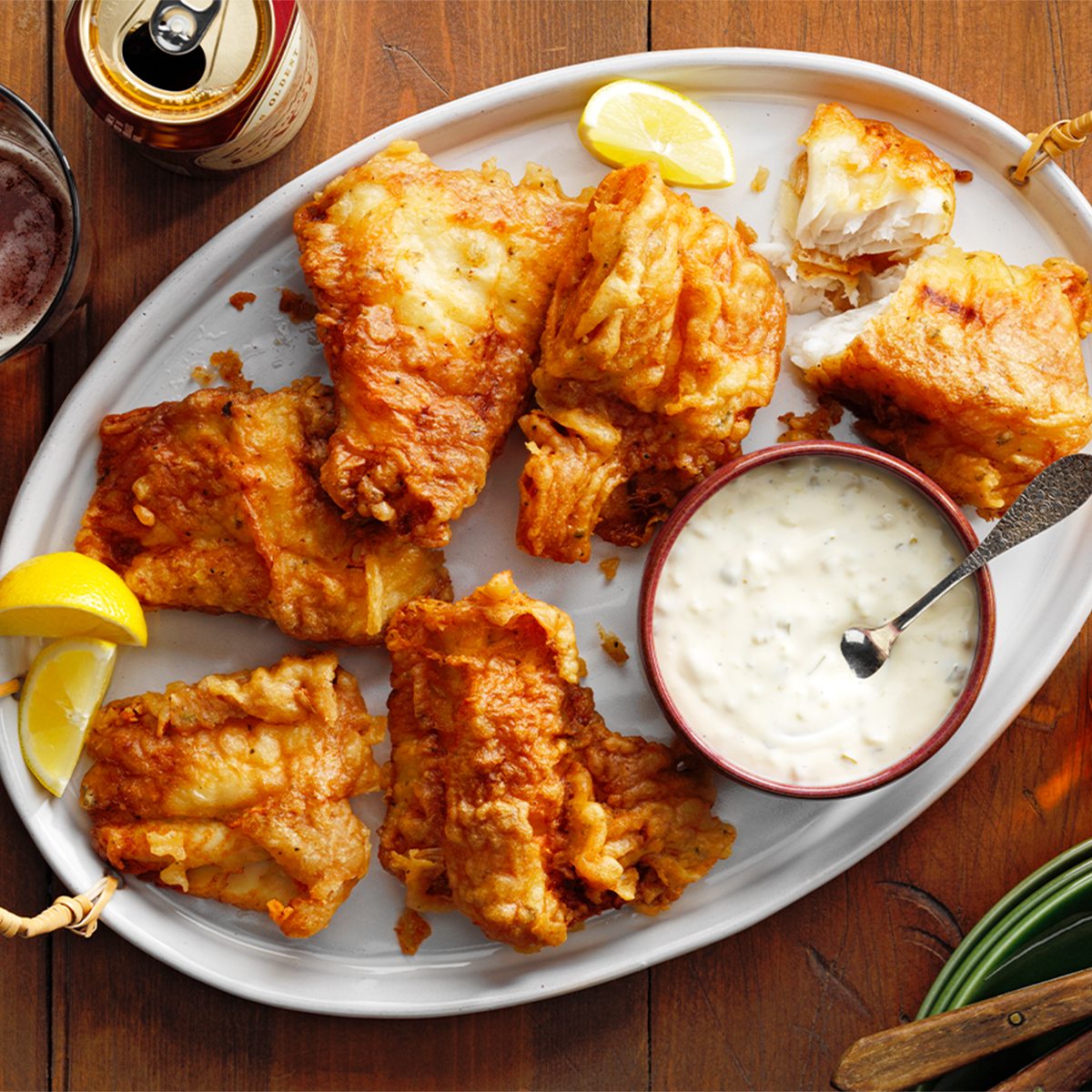
From canola to sunflower, we'll point you to the best oil to fry fish so it's light and crispy every time.
Our editors and experts handpick every product we feature. We may earn a commission from your purchases.Learn more.
There’s nothing like a beautifully fried piece of fish. It can be halibut or cod, catfish or walleye. You can make airy beer-battered fish or crunchy bread crumb-crusted strips, all with a golden brown exterior wrapped around tender, flaky fish. It’s easy to deep-fry at home with a few tips and a good thermometer, but aside from the technique, you have to start with the best oil to fry fish to ensure it comes out perfectly.
After picking up fresh fish, decide whether you want to deep-fry it or pan-fry it, since each method uses different cooking oils. Choosing the right oil is essential to getting that delicious, crispy, crunchy texture and light taste. We’ll break it all down for you here.
Choosing the Best Oil to Fry Fish
If you want a crisp, light piece of fish, it’s imperative to choose the best oil for frying. We recommend frying fish at oil temperatures between 350° and 375°F. Some oils perform well at these higher temperatures, but others can’t take the heat and can taste burnt, bitter or lose their flavor completely.
So how do you choose? It comes down to two things: the oil’s smoke point and its flavor.
- Oil smoke point: The smoke point is the temperature at which fats begin to burn and smoke. When you cook a fat past this temperature, it can taste burnt and acrid, imparting those flavors into whatever you’re cooking. That’s not good for a proper fish fry! Look for an oil with a high smoke point, like vegetable, safflower, peanut or canola oil.
- Oil flavor profile: Frying foods means surrounding them in oil, so the oil’s flavor becomes part of the dish as it’s absorbed into the food. You don’t want to mask the fish’s delicate flavor with a heavy oily coating. For the most neutral taste, stick with canola, sunflower or safflower oil. Stronger-flavored oils, like olive oil and coconut oil, could overpower the fish.
The Best Oils for Frying Fish
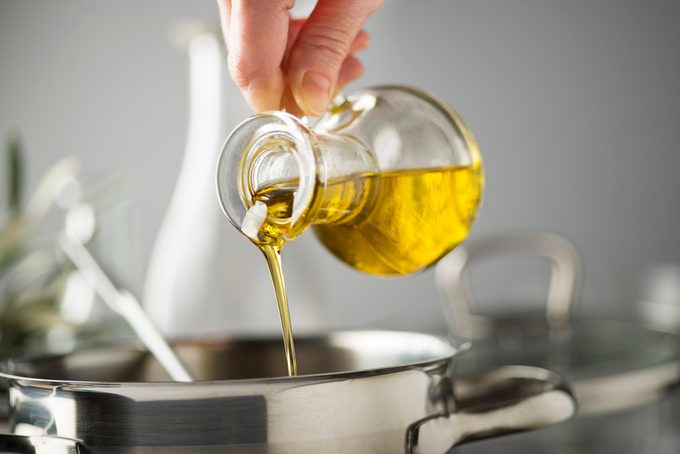
Avocado oil
- Smoke point: 500° to 520°
- Flavor profile: Buttery
Avocado oil doesn’t taste like the fruit, but it does have a similar buttery richness. With its mild taste and very high smoke point, it’s excellent for frying fish until crisp without imparting its own flavor. The biggest drawback to using avocado oil is its price. It’s one of the more expensive options, which can add up when deep-frying. It’s better for shallow-frying or pan-frying, which uses more moderate amounts so you can stretch the bottle further.
Choose refined avocado oil for the highest smoke point. It’s rich in monounsaturated fats and antioxidants, making it a healthful choice.
Safflower oil
- Smoke point: 450° to 510°
- Flavor profile: Mild, mostly flavorless
With its high smoke point and neutral flavor, refined high oleic safflower oil is great for frying fish. It’s important not to use unrefined or semi-refined safflower oil, however, as they have lower smoke points (225° and 320°, respectively) and aren’t suitable for frying.
Safflower oil is considered a heart-healthy option because it’s rich in unsaturated fats. It’s a mid-priced oil, costing more than canola or vegetable oil but less than olive oil.
Peanut oil
- Smoke point: 450°
- Flavor profile: Slightly nutty
While often used for fried chicken and french fries, peanut oil’s high smoke point makes it a great contender for frying fish. It doesn’t taste as strong as eating a handful of roasted peanuts, but it does give the food you are cooking in it a slightly toasted, nutty flavor.
Peanut oil is affordable and has a surprisingly high vitamin E content. It’s generally considered a healthful oil, but it contains a high amount of omega-6 fatty acids, which should be consumed in moderation.
Sunflower 0il
- Smoke point: 450°
- Flavor profile: Light, nearly tasteless
This all-purpose oil is almost clear with a light yellow hue and is great for baking and everyday cooking. It’s also good for frying, as refined high oleic sunflower oil has a high smoke point and very light flavor. The refining process removes impurities, making the oil stable at high temperatures and nearly flavorless.
High oleic sunflower oil is high in monounsaturated fats and low in saturated fats, making it a heart-healthy option. It’s a mid-priced oil, more expensive than canola or vegetable oil but less than avocado or safflower.
Canola oil
- Smoke point: 400°
- Flavor profile: Light, neutral
Canola is something of a jack-of-all-trades oil. It’s perfect for everything, from searing and roasting to frying. Canola, a type of rapeseed oil, was developed in Canada in the early 1970s using natural crossbreeding as a food-grade, low-acid oil. The name comes from “Canada oil, low acid.” It’s great for deep-frying fish because it has a very light taste, has a high smoke point and isn’t too expensive.
Vegetable oil
- Smoke point: 400° to 450°
- Flavor profile: Very light, almost tasteless
Technically, canola and sunflower oils are types of vegetable oil. But oil simply labeled as “vegetable oil” is usually soybean oil or a blend of other plant-based oils, most commonly corn. With a smoke point slightly higher than canola oil and an even lighter taste, it’s excellent for deep-frying. It imparts little to no flavor and helps achieve crispy, crunchy textures. It’s affordable, widely available and low in saturated fats.
Frying Fish FAQ
What types of fish are best for frying?
When choosing the best fish for frying, go with flaky white fish like Alaskan cod, haddock or tilapia. Halibut is slightly more expensive and meatier but also fries up juicy and tender. If you prefer freshwater fish, try honey-fried walleye or a classic plate of fried catfish. Whole small fish, like smelt and branzino, are excellent for pan-frying. And while you can fry steak-type fish, like swordfish, tuna and salmon, we find they’re better choices for searing, broiling or grilling.
At what temperature do you fry fish?
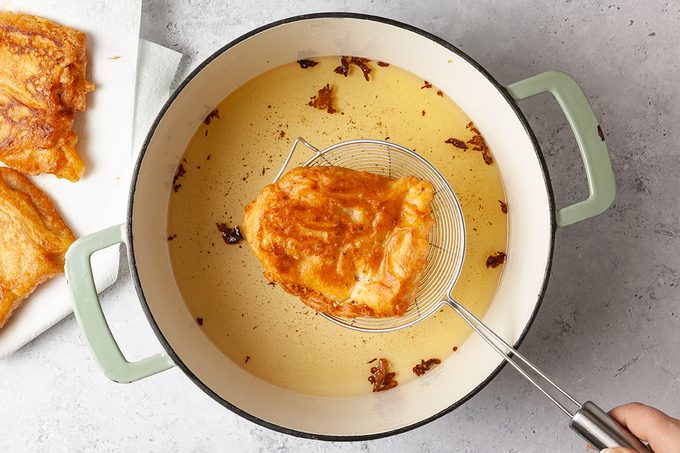
The best temperature to fry fish is actually a range between 350° and 375°, so the fish can fully cook through before the exterior becomes too dark. A countertop electric deep fryer can be set to a specific temperature, but if you are using a deep pot on the stove (we recommend a cast-iron Dutch oven), you should use a deep-fry thermometer and be prepared to adjust the heat as you fry to maintain the ideal temperature range.
What is the secret to a good fish fry?
The secret to a good fish fry is cooking the fish in the right temperature oil. Don’t be tempted to rush and drop the fish into the oil before it’s properly heated or the coating will soak up all the oil and taste heavy. The oil temperature will initially drop a bit when you add fish, so fry just a few pieces at a time to minimize the swing. Keep an eye on the temperature, ensuring it rebounds back to the range you want between batches. If reusing oil, make sure it’s strained and clean for the best taste.
The other key is serving fried fish right after it’s cooked. You want the fish to have a fresh, flaky interior and a crisp, golden brown coating that tastes light, not greasy. After cooking, briefly drain fried fish on paper towels and serve it right away. Set out a few sauces like tartar sauce, lemon wedges and a few sides for fried fish for the perfect meal.
Is fried fish healthy?
Fish itself is nutrient-rich and high in protein, but once you bread or batter it to make crispy beer-battered fish, the added fat and calories veer it away from being the healthiest option. Instead of deep-frying, try dusting the fillets with flour or cornmeal, then sauteing them in a small amount of oil. You can also make crispy oven-fried fish and chips or air-fryer fish and chips, which don’t require much oil.