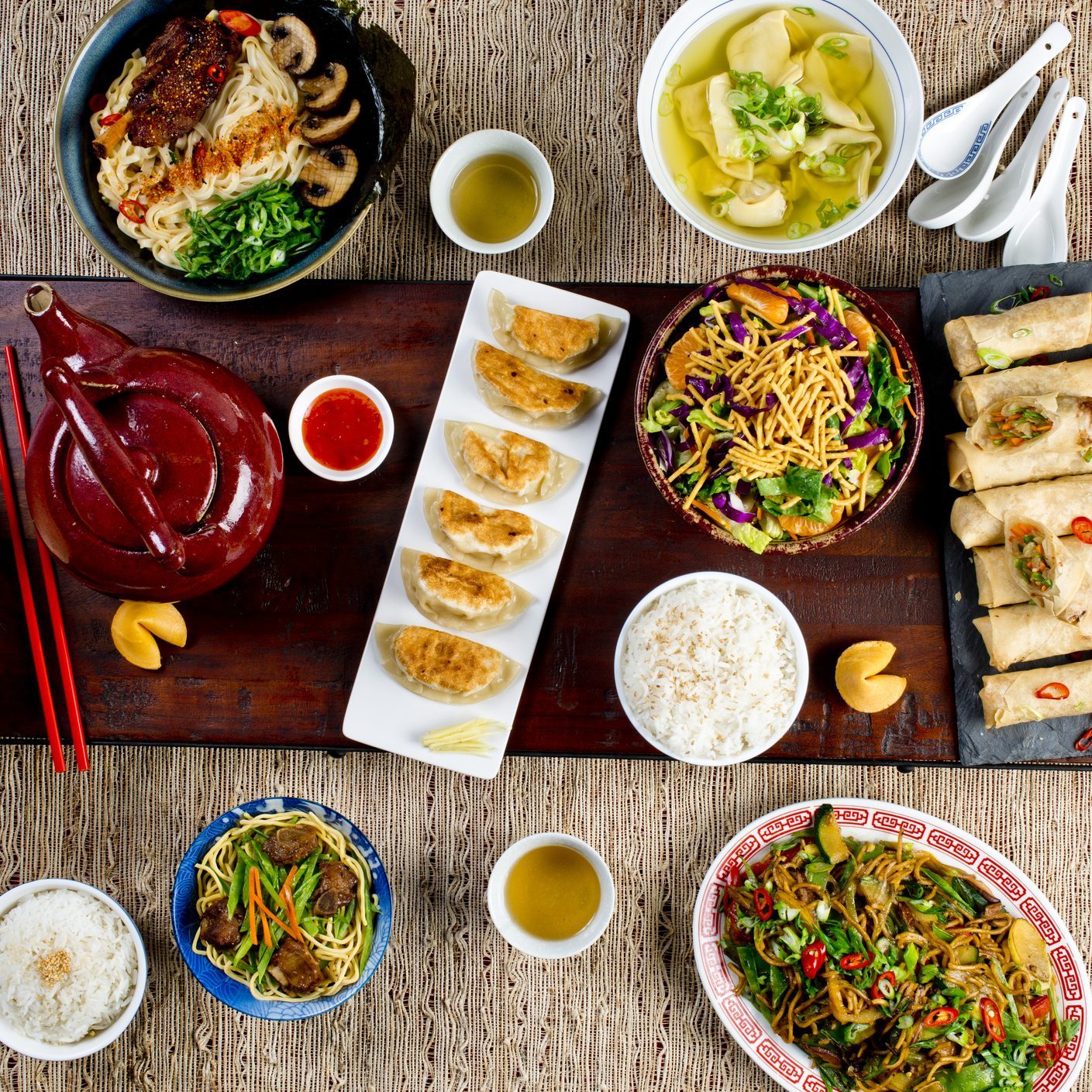
Enjoying classic Lunar New Year food dishes during the holiday is said to bring luck and good fortune for the coming year. Here's a guide to their symbolic meanings.
Dumplings
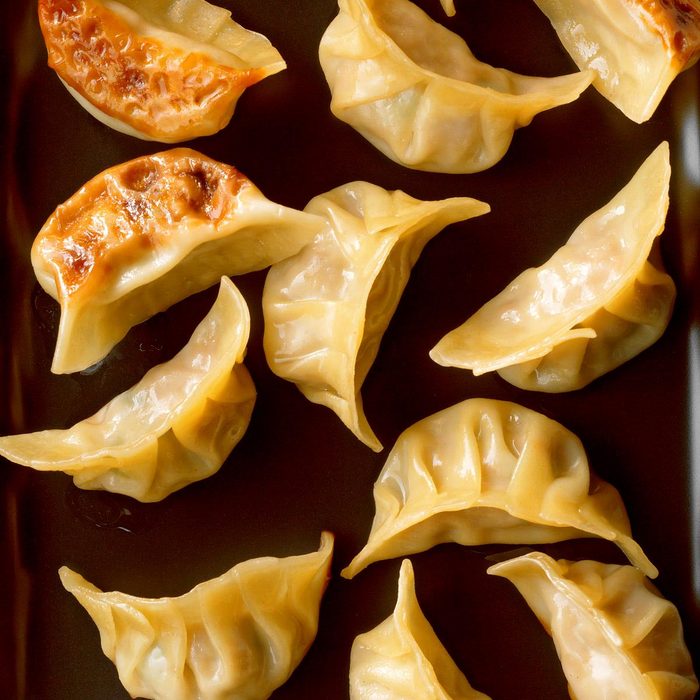
Dumplings are an important Lunar New Year food symbolizing wealth and family unity. Making dumplings brings families together as they work to stuff and seal dozens of them to enjoy during the festivities. The shape is similar to a purse, tying the dumplings back to the notion of wealth, and some people even add a coin or small charm to one dumpling for the lucky eater to find. The fillings can vary, although pork dumplings are most common.

Longevity Noodles
Known as changshou mian, which means “long-life noodles,” these noodles can be up to 2 feet long. According to Chinese tradition, you should slurp the noodles without breaking them or your wishes may not come true. These noodles can be stir-fried and sauced or served in a hot broth.
Tray of Togetherness
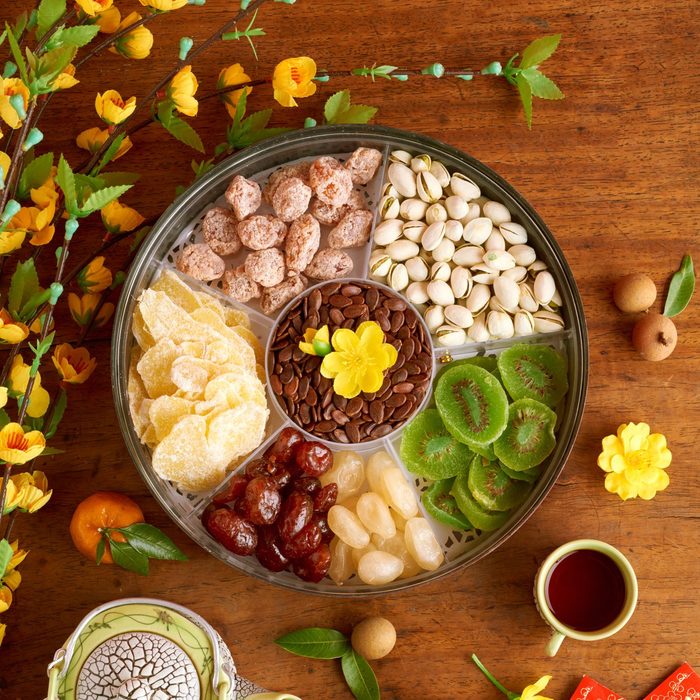
This tray of sweets usually has eight compartments (or six on a smaller tray), each holding a treat, such as dried fruit, candy or nuts. Sometimes the center is left open for red envelopes, a traditional Lunar New Year gift. The idea is that offering something sweet to your guests puts forward best wishes for a sweet year full of prosperity and longevity.
Spring Rolls
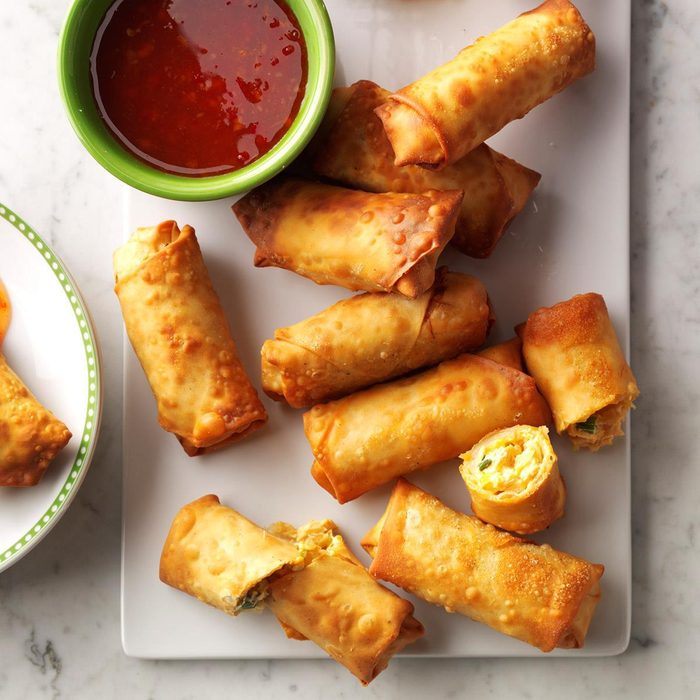
Resembling bars of gold, spring rolls symbolize wealth and good fortune, making them a traditional Lunar New Year food. You can stuff these deep-fried rolls with various fillings, including pork, bean sprouts, shredded carrots, cabbage and assorted veggies. The difference between egg rolls and spring rolls is that egg rolls have a thick wrapper made from wheat flour and eggs, while spring rolls have a thinner wrapping.

Oranges and Other Citrus
Oranges, kumquats, tangerines and pomelos are common Chinese New Year food gifts because they’re believed to bring good luck and happiness. The Chinese words for orange and tangerine closely resemble the words for luck and wealth. The gold color also symbolizes prosperity.
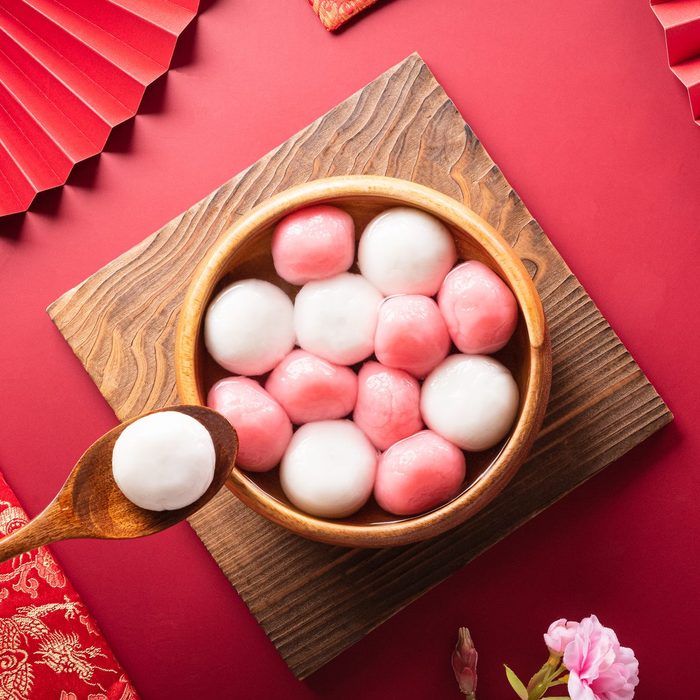
Sweet Rice Balls
These sweet rice balls are a common Lunar New Year food, specifically during the Lantern Festival on the final day of Chinese New Year. The round shape signifies unity, and the sugary taste symbolizes a sweet year ahead. These gooey balls also represent harmony and family togetherness because their name (tang yuan) sounds like the word for reunion in Chinese (tuan yuan).

Fish
Fish is one of the most important Lunar New Year foods. In Mandarin, the pronunciations of the words for fish and prosperity or abundance sound similar. Fish is eaten so the coming year will be abundant in all ways. Because nobody wants just a little prosperity, it’s important to cook and serve a whole fish rather than filets or pieces.

Year Cake
The Chinese word for this cake—nian gao—is pronounced exactly like the word for higher year, which makes this dessert lucky. This cake is dense and chewy due to its glutinous rice flour base. People eat nian gao to help forecast a year of good health, wealth and happiness.
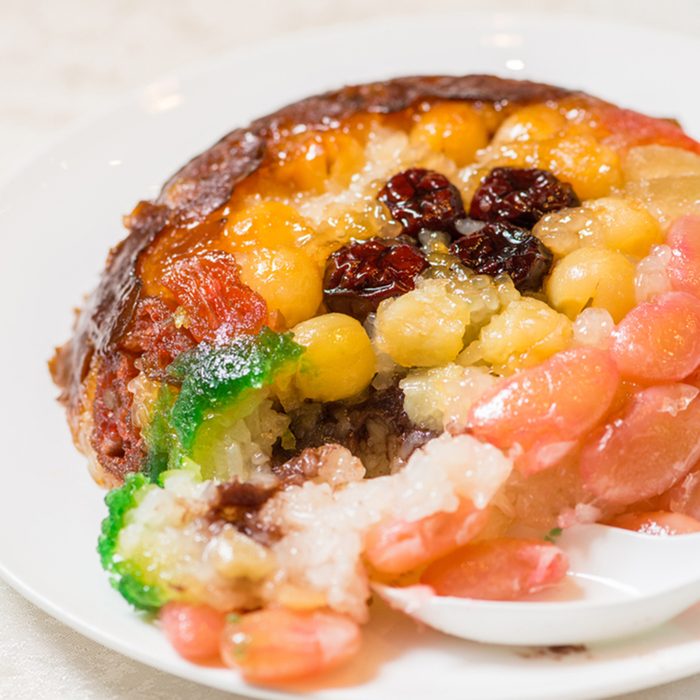
Eight Treasure Rice
This traditional dish is made with sticky rice and adorned with eight “treasures”—a variety of dried fruits, nuts and red bean paste. Eight is a lucky number in many Asian cultures, and eating desserts on this holiday represents sweetness for the year ahead.

Prosperity Cakes
These steamed, fluffy, lightly sweet cakes (fa gao) are known for their split tops, which open up like a flower as they cook. Fa gao sounds like the words for prosperity and high, which is why this light dessert symbolizes growth and wealth in the coming year.

Almond Cookies
Chinese almond cookies have a round shape and a golden color, like a coin, symbolizing wealth and good fortune. The shape, along with the cookie’s sweet taste, fits the themes of Lunar New Year, offering good wishes for the coming year.
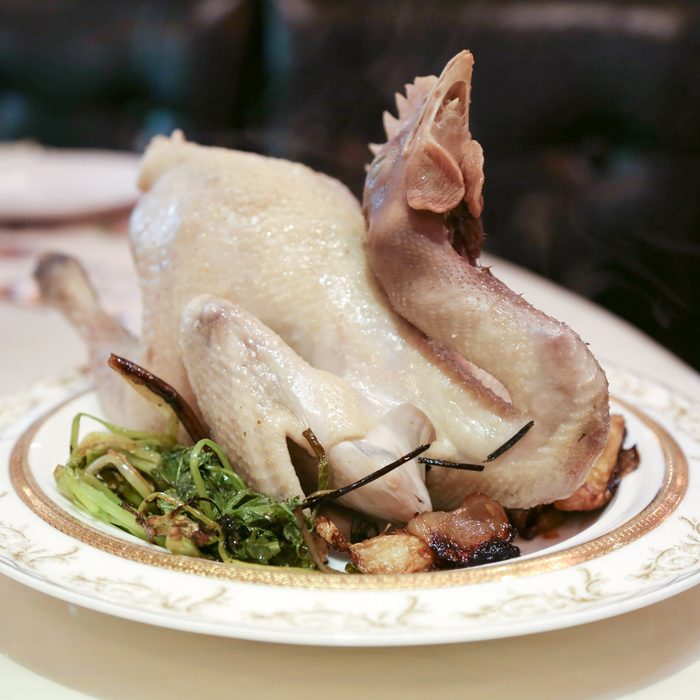
Whole Chicken
Serving an entire chicken (head and feet included) celebrates wholeness and prosperity in the new year. The Chinese word for chicken, jī, is a homophone for good luck and great wealth and also symbolizes unity.
Lunar New Year Food FAQ
What foods are eaten on Lunar New Year?
Every country has slightly different traditional foods for Lunar New Year; however, there are common themes and dishes across cultures that overlap, including long noodles, spring rolls, dumplings, rice dishes and round foods that symbolize wealth, prosperity and good fortune. In Korea, Seollal Lunar New Year foods include Tteokguk, a rice cake soup, and Japchae, stir-fried glass noodles. In Vietnam, during Tet, they enjoy Xôi Gấc, a sticky rice with fruit, and Bánh chưng, a sticky rice cake.
What does traditional Lunar New Year food symbolize?
Traditional Lunar New Year foods symbolize prosperity, wealth, good fortune, luck and longevity. The foods connect with the symbolism in a variety of ways, including shape, color, ingredients and size.
Are there any foods I should avoid on Lunar New Year?
In the same way there are foods that symbolize prosperity, there are foods that symbolize the opposite, which are avoided during Lunar New Year. Dishes like congee or porridge, which are made from humble grains, are not eaten to prevent a poor start to the year. Since white is associated with death in Asian cultures, solid white foods, such as tofu, are not eaten during Lunar New Year.
[skyword_tracking]