


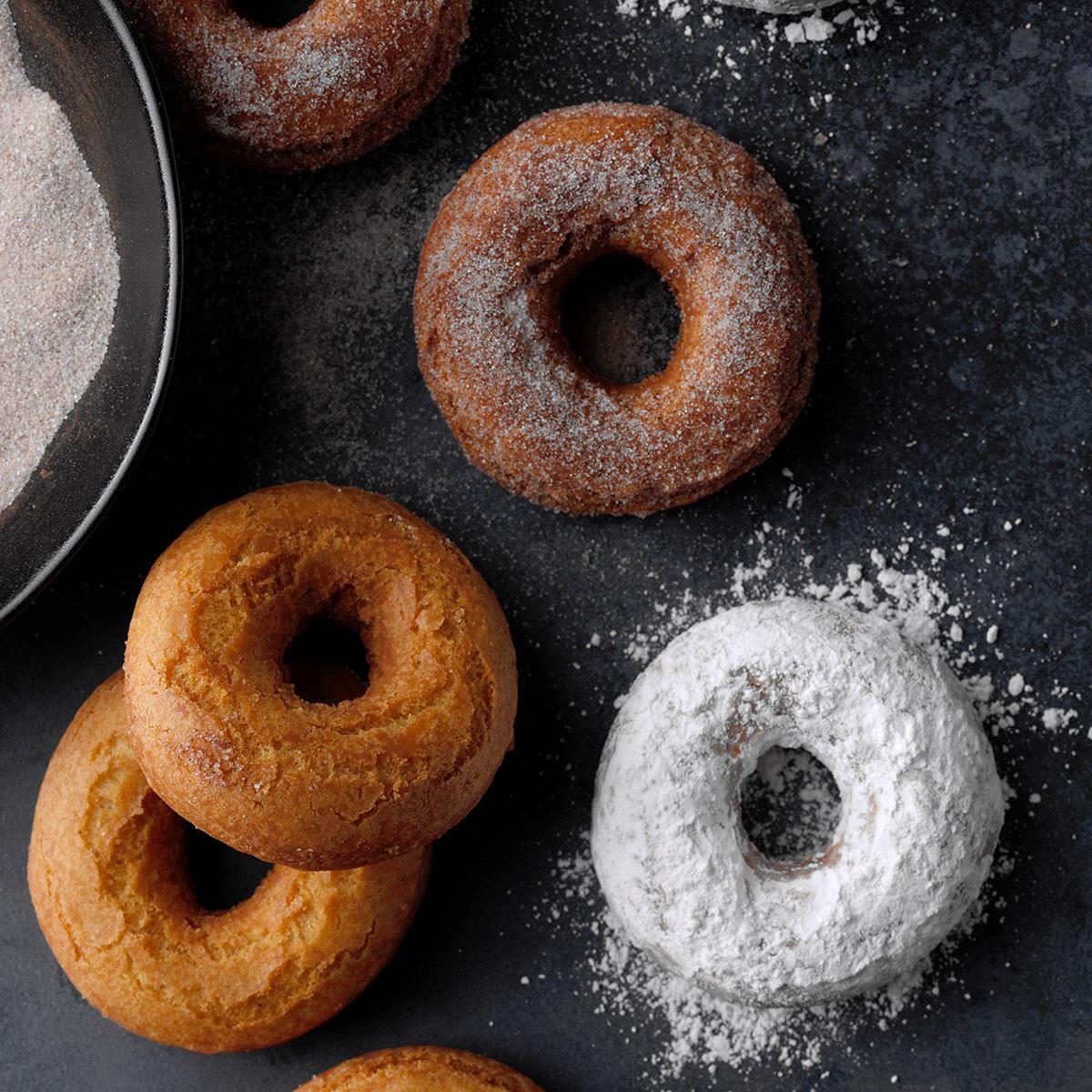
Buttermilk Doughnuts
It doesn't take long for a platter of these buttermilk doughnuts to vanish. Our grandkids go for them in a big way! They're great for munching at breakfast or brunch. —Betty Rauschendorfer, Sidney, Montana
Buttermilk Doughnuts Tips
What can you use if you don't have buttermilk?
There are a number of options if you don’t have buttermilk. The classic substitute is regular milk mixed with either white vinegar or lemon juice. (For each cup of buttermilk, use 1 Tbsp. of lemon juice or vinegar, and then add enough milk to measure 1 cup.) Let the mixture stand for 5 to 10 minutes to sour, and then use in the doughnut recipe. If you don't have lemon juice or white vinegar, there are other buttermilk substitutes, too—including milk mixed with cream of tartar, yogurt or sour cream.Can you add a glaze to buttermilk doughnuts?
The classic topping for buttermilk doughnuts is either confectioners’ sugar or a cinnamon-sugar mix. However, you can definitely add a glaze if you like. Here’s how to make glaze for doughnuts, from a plain sugar glaze to flavored varieties like coffee, orange or pumpkin spice. Chocolate glaze is a favorite, and in the fall, there’s nothing like a rich maple glaze!Can you make buttermilk doughnuts ahead of time?
These buttermilk doughnuts are more like a cake than a bread. While other doughnuts rely on yeast for their rise, these work with baking soda and baking powder as leaveners. So, it’s best not to wait too long between making the dough and frying the doughnuts. Chilling the dough for few hours is fine, but waiting overnight might affect how well your doughnuts fry. The good news is, you can make the doughnuts and then freeze them quite easily instead. This goes for both cake doughnuts (like this recipe) and yeast doughnuts (like these glazed doughnuts). Learn how to freeze all kinds properly in our guide to freezing doughnuts.—Hazel Wheaton, Taste of Home Book Editor

