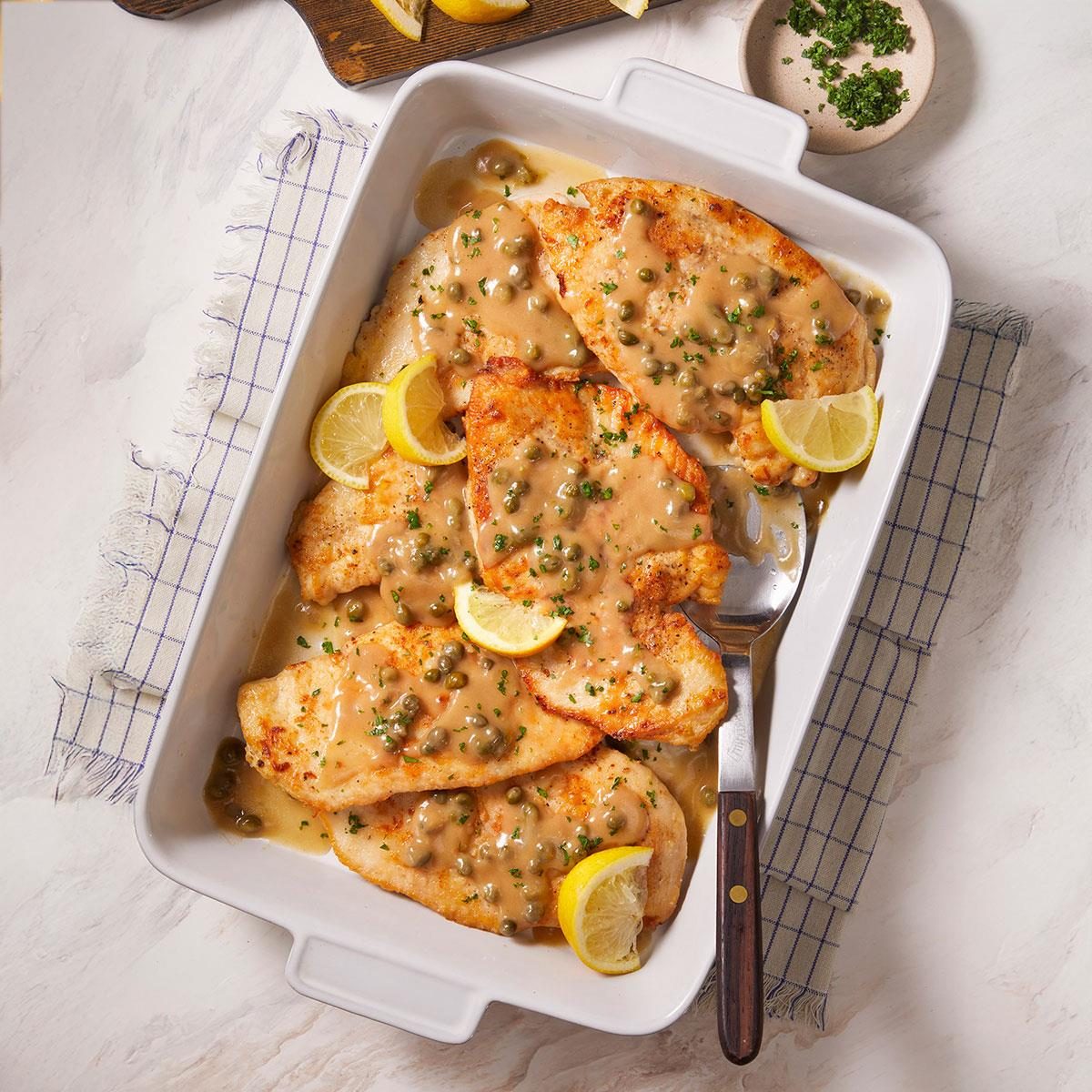
If you need inspiration for your next chicken dinner, this easy chicken piccata with a bright lemon-and-caper butter sauce is a surprisingly easy to make option.
Chicken piccata is one of those recipes that looks elegant and tastes complex but is surprisingly simple to make. There’s no sophisticated seasoning or prep—just some chicken and a handful of ingredients that come together into a caper-studded lemon-and-butter sauce that does all the heavy lifting. It’s a classic lemon chicken recipe that always hits the spot.
Although chicken piccata sounds and tastes like something you’d find at a trattoria in Milan, it’s an Italian American dish that borrows from old-school Italian technique. The method is similar to traditional veal scallopini, but the caper-and-lemon flavor combination is decidedly piccata.
Ingredients for Chicken Piccata
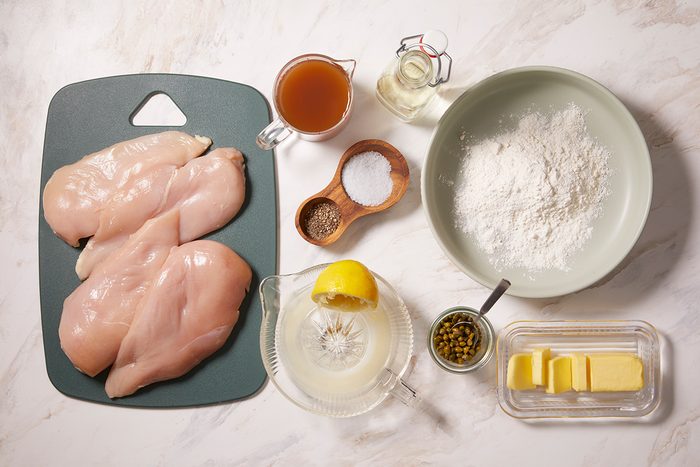
- Boneless skinless chicken breast halves: Look for evenly sized chicken breasts, so once halved they cook at similar rates. If you are short on time, start with thin-sliced boneless skinless chicken breasts and skip the flattening step.
- Salt and pepper: Since the sauce is so flavorful, the chicken needs only these two everyday seasonings.
- All-purpose flour: Instead of bread crumbs, a light dredging of flour on the chicken creates a golden crust.
- Olive oil: Use regular vs. extra virgin olive oil for browning the chicken since it has a higher smoke point and milder taste.
- Chicken stock: Chicken stock forms the base of the zesty, velvety sauce. Homemade stock and store-bought chicken broth both work well.
- Capers: Salty, briny capers are the signature ingredient in this chicken piccata recipe.
- Lemon juice: Since the sauce is a lemon sauce, use freshly squeezed lemon juice if possible. Bottled concentrate just doesn’t have that bright taste.
- Butter: Butter gives the sauce viscosity and a lightly creamy taste. If using salted butter, season the chicken lightly so the dish doesn’t become too salty.
Directions
Step 1: Prepare the chicken breasts

Preheat the oven to 350°F. Cut the chicken breasts in half crosswise, creating two thin layers. Pound each with a meat mallet to 1/2-inch thickness, then sprinkle with salt and pepper.
Step 2: Brown the chicken breasts

Place the flour in a shallow bowl. Dip the chicken breasts in flour to coat both sides, shaking off any excess.
In a large skillet, heat 1 tablespoon of olive oil over medium-high heat. Brown the chicken in batches, adding additional oil as needed. Transfer the chicken to an ungreased 13×9-inch baking dish.
Editor’s Tip: Don’t overcrowd the skillet or the chicken will steam rather than brown and lightly crisp.
Step 3: Make the lemon-caper sauce, spoon over chicken and bake

Add the chicken stock, capers and lemon juice to the pan, stirring to loosen any browned bits. Whisk in the butter, 1 tablespoon at a time, until the sauce is creamy.

Spoon the sauce over the chicken, and bake for 5 to 10 minutes or until the chicken is no longer pink.
Editor’s Tip: For a stronger lemon flavor, zest the lemon before juicing it, then add a few pinches of zest to the sauce with the juice.

Recipe Variations
- Add white wine: Use a small amount of white wine to loosen the browned bits in the skillet before adding the stock and lemon juice. Choose a dry white wine that’s not heavily oaked and that you would also enjoy with the meal, such as a pinot grigio. These are some of our favorite white wines under $20 that would taste great with the lemon and caper sauce.
- Coat the chicken in bread crumbs: For a thicker coating that takes the recipe into chicken Francese territory, dip the chicken in beaten egg and seasoned bread crumbs instead of flour.
- Swirl fresh herbs into the sauce: A sprinkling of chopped fresh parsley or chives adds another aromatic layer without changing the character of the sauce.
How to Store Chicken Piccata
Store chicken piccata in an airtight food storage container in the refrigerator for three to four days. The butter-based sauce will not freeze well, so it’s better to make a half-batch if you don’t think you will be able to eat it within a few days.
How do you reheat chicken piccata?
Reheat chicken piccata gently in a covered skillet on the stove, adding a splash of water or chicken stock to loosen the sauce and keep the chicken tender. You can also microwave the chicken, covered, in short intervals, just until hot throughout. Taste it before serving and adjust the sauce with a fresh squeeze of lemon juice or a pinch of salt.
Chicken Piccata Tips
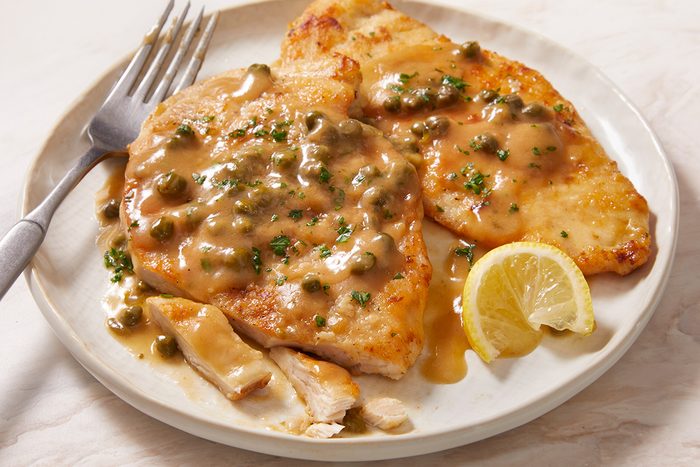
Why does my chicken piccata sauce taste bitter?
If you simmer the sauce with lemon seeds, it can make the piccata sauce taste bitter. To prevent this, just strain the juice after squeezing it from the lemon. Also, if the heat under your skillet is too high or you coat the chicken with too much flour, it can burn, making the sauce taste bitter. Brown bits add flavor to the sauce, but if they are black and smoking, remove the pan from the heat, cool slightly, and carefully wipe out the burnt flour and oil. Add a bit of fresh oil and continue with the recipe.
Is there a substitute for capers?
Not everyone loves capers, so you can substitute them with another briny option, like pitted green olives or marinated artichokes. Olives are the closest match, which is why capers and olives are often preserved together. To kick up the lemon flavor, try a scattering of finely chopped preserved lemons in the sauce, but add them lightly, as they are quite salty.
What can I serve with chicken piccata?
This recipe takes only about 30 minutes total, so you’ve got just enough time to whip up some creamy mashed potatoes, rice, couscous or noodles. Anything starchy that can soak up the lemony sauce is perfect.
Ingredients
- 4 boneless skinless chicken breast halves (6 ounces each)
- 1/2 teaspoon salt
- 1/4 teaspoon pepper
- 1/2 cup all-purpose flour
- 3 tablespoons olive oil
- 1 cup chicken stock
- 4 tablespoons capers, drained
- 3 tablespoons lemon juice
- 4 tablespoons butter
- Optional: chopped fresh parsley and lemon wedges
Directions
-
1Preheat oven to 350°. Cut chicken breasts in half crosswise, creating two thin layers. Pound with a meat mallet to 1/2-in. thickness; sprinkle with salt and pepper. Place flour in a shallow bowl. Dip chicken in flour to coat both sides; shake off excess.
-
2In a large skillet, heat 1 tablespoon oil over medium-high heat. Brown chicken in batches, adding additional oil as needed. Transfer chicken to an ungreased 13x9-in. baking dish.
-
3Add stock, capers and lemon juice to skillet, stirring to loosen browned bits from pan. Stir in butter, 1 tablespoon at a time, until creamy. Spoon sauce over chicken. Bake 5-10 minutes or until no longer pink. If desired, sprinkle with chopped parsley and serve with lemon wedges.