


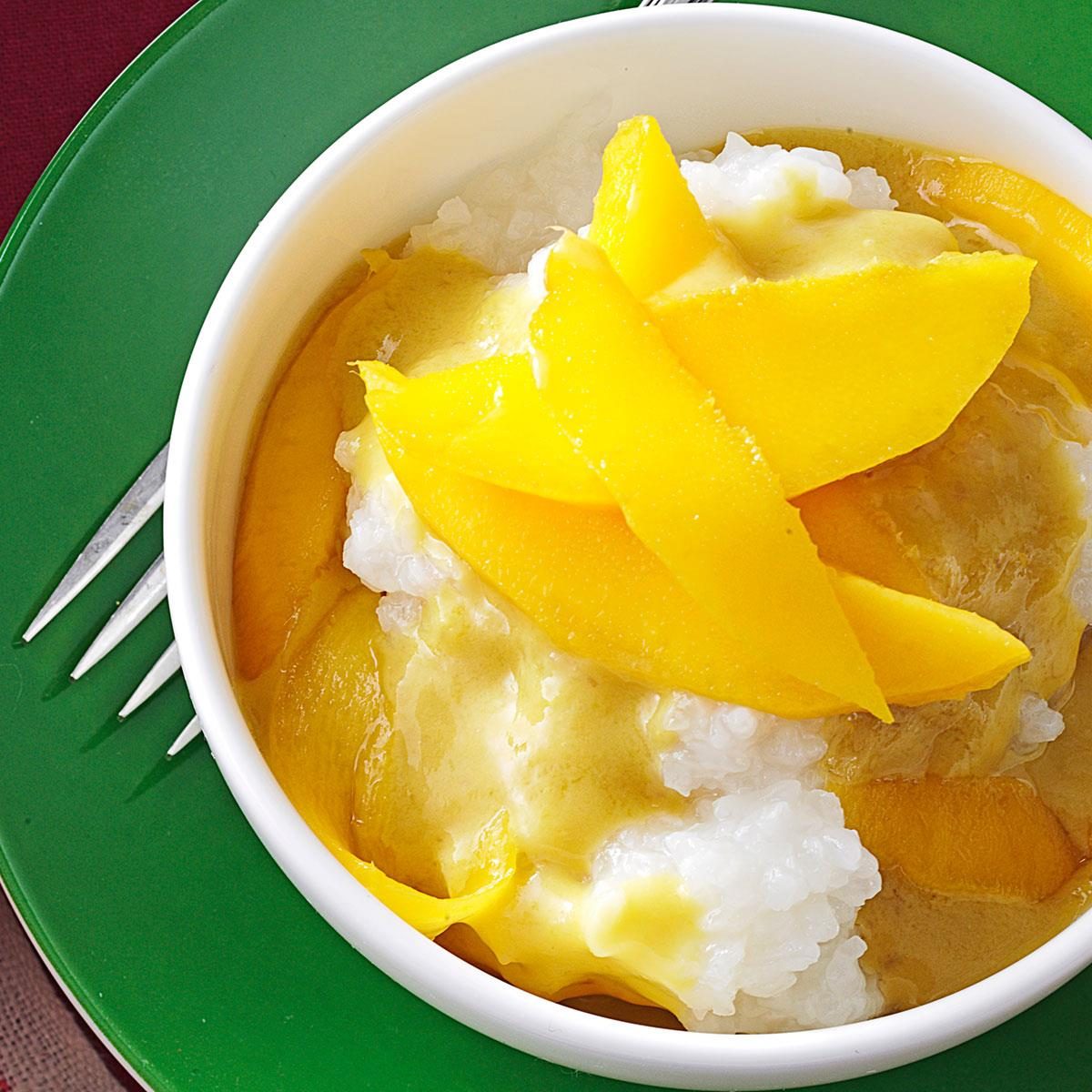
Mango Sticky Rice
As a nice contrast to traditional desserts, this Thai mango sticky rice recipe is a refreshing treat with a sweet and simple sauce that perks up your post-dinner taste buds.—Monnie Norasing, Mansfield, Texas
Sticky Rice with Mango Coconut Sauce Recipe Tips
How should you store mango sticky rice?
Cooked sticky rice should be cooled and then stored in an airtight container in the refrigerator; store the rice and the sauce separately. Reheat it in the microwave, and add a tablespoon of water to provide some added steam action and maintain the texture. Leftover rice should not be kept for more than 2 days, and once it’s been reheated, it shouldn’t be refrigerated again.Can you use other types of rice for this mango sticky rice recipe?
Sweet rice, as it’s called in the ingredients, can also be labeled as glutinous rice, sticky rice, mochi rice or waxy rice. You can find it in Asian food stores and in the international section of some supermarkets. The difference between sweet rice and other kinds of white rice is in the starch, and there is not a direct substitute for it. Mango Sticky Rice can be made with a different long-grain white rice, such as jasmine rice or sushi rice, but cooking methods and times for other types of rice is different due to the lower starch content, and steps must be taken to make the rice stickier than it normally would be. To follow this recipe, it’s best to use the rice called for.How should you eat mango sticky rice?
Mango sticky rice is a traditional dish that brings the world’s most popular fruit front and center, but there’s no hard-and-fast rules to how it should be served. It can be served either hot or cold; both are traditional and the choice is up to you! In Thailand, it’s often served as a street food, and is eaten by hand! It can be a sweet informal snack, or elegantly plated in a large, shallow bowl as the ending to any of your favorite Thai recipes.—Hazel Wheaton, Taste of Home Editor

